

When it comes to barbecue, few cuts of meat are as beloved as pork butt. Known for its rich flavor and tender texture, it’s a favorite for pulled pork sandwiches and hearty meals. However, achieving the perfect result hinges on one crucial factor: the internal temperature.
Understanding the right internal temp for pork butt not only ensures safety but also maximizes flavor and tenderness. Cooking it to the ideal temperature allows the collagen in the meat to break down, resulting in that melt-in-your-mouth experience everyone craves. Whether you’re a seasoned pitmaster or a backyard grilling enthusiast, mastering this key aspect can elevate your culinary game.
Understanding Pork Butt
Pork butt, known for its robust flavor and versatility, is a popular cut in barbecue. Mastering its preparation hinges on understanding its characteristics and optimal cooking methods.
What Is Pork Butt?
Pork butt, despite its name, comes from the upper shoulder of the pig. This cut features a significant amount of marbled fat, which contributes to its flavor and tenderness during cooking. Commonly used in dishes like pulled pork, it requires slow cooking methods for best results. Cooking at the right internal temperature transforms tough connective tissues into flavorful, tender meat.
Cuts and Characteristics
Pork butt includes several sub-cuts, each with distinct features:
- Boston Butt: Primarily used for pulled pork, this cut has a high-fat content that renders during cooking, enhancing the meat’s tenderness and flavor.
- Shoulder Picnic: Often used for stewing or roasting, this cut has more muscle and less fat than the Boston butt, resulting in a firmer texture.
- Fat Cap: The thick layer of fat that covers pork butt helps to baste the meat during cooking, retaining moisture and flavor.
- Marbling: Intramuscular fat within pork butt melts during cooking, providing juiciness and richness to the final dish.
Understanding these cuts and their characteristics aids in proper cooking techniques, ensuring flavorful and tender outcomes.
Importance Of Internal Temperature
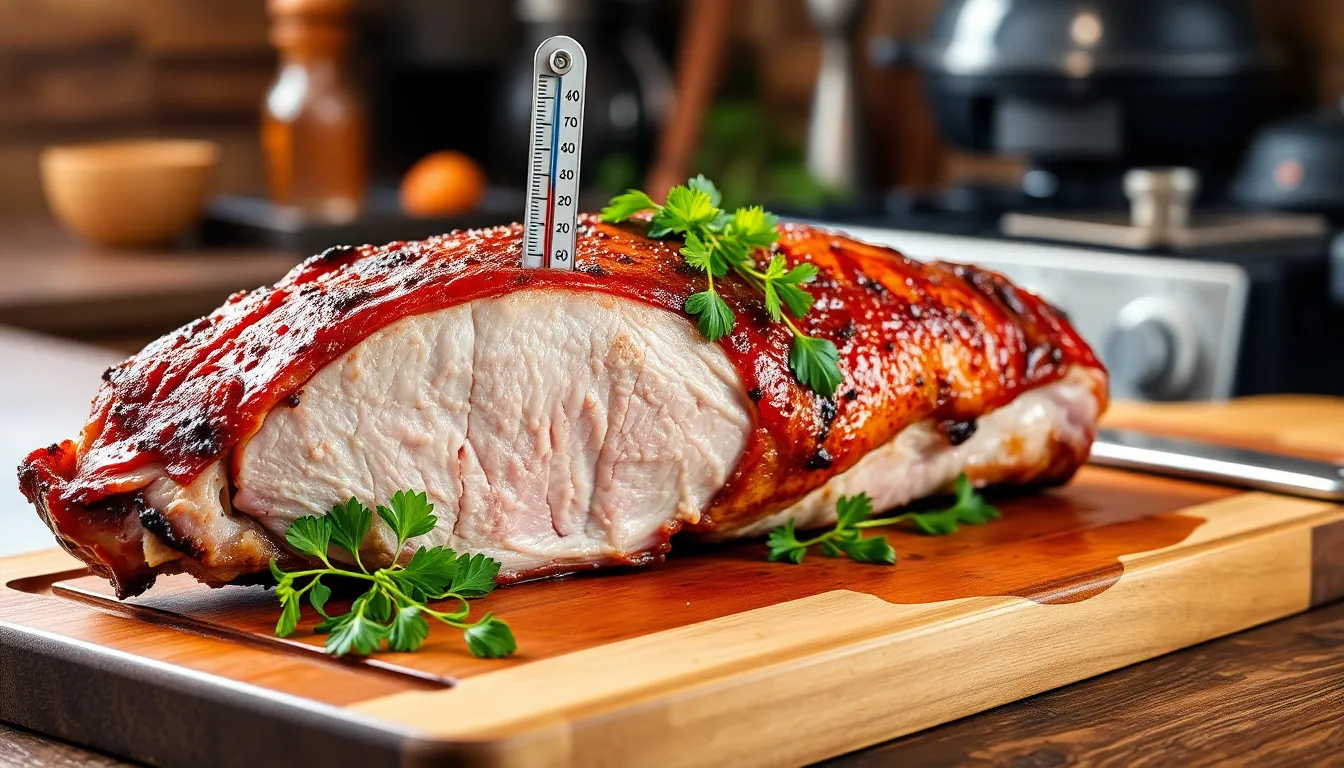
Achieving the correct internal temperature for pork butt is crucial for both safety and quality. Proper temperature control not only prevents foodborne illnesses but also ensures perfect tenderness and flavor development.
Safety Considerations
Cooking pork butt to the appropriate internal temperature prevents harmful bacteria from causing foodborne illnesses. The USDA recommends an internal temperature of at least 145°F for pork, followed by a resting period. For best results in pulled pork preparations, reaching an internal temperature of 195°F to 203°F ensures collagen breakdown, enhancing tenderness while maintaining safety.
Factors Affecting Cooking Temperature
Several factors influence the cooking temperature of pork butt.
- Thickness of the Cut: Thicker cuts require longer cooking times to reach the target internal temperature.
- Cooking Method: Smoking, roasting, or slow cooking methods affect heat distribution and cooking duration.
- Starting Temperature: Cold meat taken directly from the refrigerator extends cooking time.
- Ambient Temperature: The cooking environment, including weather conditions for outdoor cooking, alters cooking speed.
- Fat Content: Higher fat content can lead to a longer cooking time, as the fat must render effectively for optimal results.
Understanding these factors ensures cooks can effectively manage cooking techniques to achieve the best outcomes.
Recommended Internal Temperature For Pork Butt
Achieving the correct internal temperature is essential for pork butt. This not only ensures food safety but also maximizes flavor and tenderness.
Ideal Cooking Temperatures
Pork butt should reach an internal temperature of at least 145°F for safety, according to the USDA. Cooking the meat to a higher temperature of 195°F to 203°F yields optimal tenderness, allowing collagen to break down effectively. This range is essential for dishes like pulled pork, making it easy to shred and enhancing the overall eating experience.
| Temperature Range | Purpose |
|---|---|
| 145°F | Minimum safe cooking temperature |
| 195°F – 203°F | Ideal for tender texture and shreddability |
Testing for Doneness
The best method for testing doneness is using a meat thermometer. Insert the thermometer into the thickest part of the pork butt, avoiding any bones for an accurate reading. The meat is done when it reaches the desired temperature. Additionally, visual cues such as a deep brown crust and juices running clear can help confirm that the pork butt is cooked properly. When the internal temperature meets standards, it’s ready for resting and subsequent serving.
Cooking Methods for Pork Butt
Pork butt can be cooked using various methods, each offering unique flavors and textures. Understanding these methods aids in selecting the best technique for achieving tender and flavorful results.
Smoked Pork Butt
Smoked pork butt is a popular choice, especially in barbecue culture. Smoking typically occurs at a low temperature, around 225°F to 250°F, over several hours. The process allows the smoke to penetrate the meat, enhancing its flavor. It’s crucial to monitor the internal temperature, aiming for 195°F to 203°F to ensure ideal tenderness. Using wood chips like hickory or applewood adds distinct flavor profiles. Wrapping the pork in foil during the cooking process can help retain moisture and shorten cooking time.
Oven-Roasted Pork Butt
Oven-roasting provides an easy alternative for cooking pork butt, especially in cooler climates. Roasting at a temperature of 300°F to 350°F for several hours yields tender meat. Seasoning the pork with a dry rub beforehand enhances flavor. Checking the internal temperature for doneness is essential; the target remains between 195°F and 203°F. Placing the pork in a roasting pan with water can create steam, aiding in moisture retention.
Slow Cooker Options
Slow cooking is a convenient method, providing hands-off preparation. Setting the slow cooker to low allows the pork butt to cook for 8 to 10 hours. This method breaks down tough collagen, resulting in tender meat. Seasoning with spices and sauces enhances flavor depth. The internal temperature should still reach 195°F to 203°F for the best texture. For added flavor, searing the pork in a pan before cooking can intensify taste.
Achieving the right internal temperature for pork butt is essential for both safety and flavor. Cooks can elevate their barbecue game by understanding the ideal range of 195°F to 203°F. This not only guarantees tender, shreddable meat but also enhances the overall dining experience.
Whether smoking, roasting, or slow cooking, monitoring the temperature ensures that the pork butt retains its rich flavor and juicy texture. With the right techniques, anyone can master this beloved cut and impress family and friends with mouthwatering pulled pork dishes.


